



|
Information
Workshop Programme
Dates and Deadlines
Call for Papers and Abstracts
Online and On-site Participation
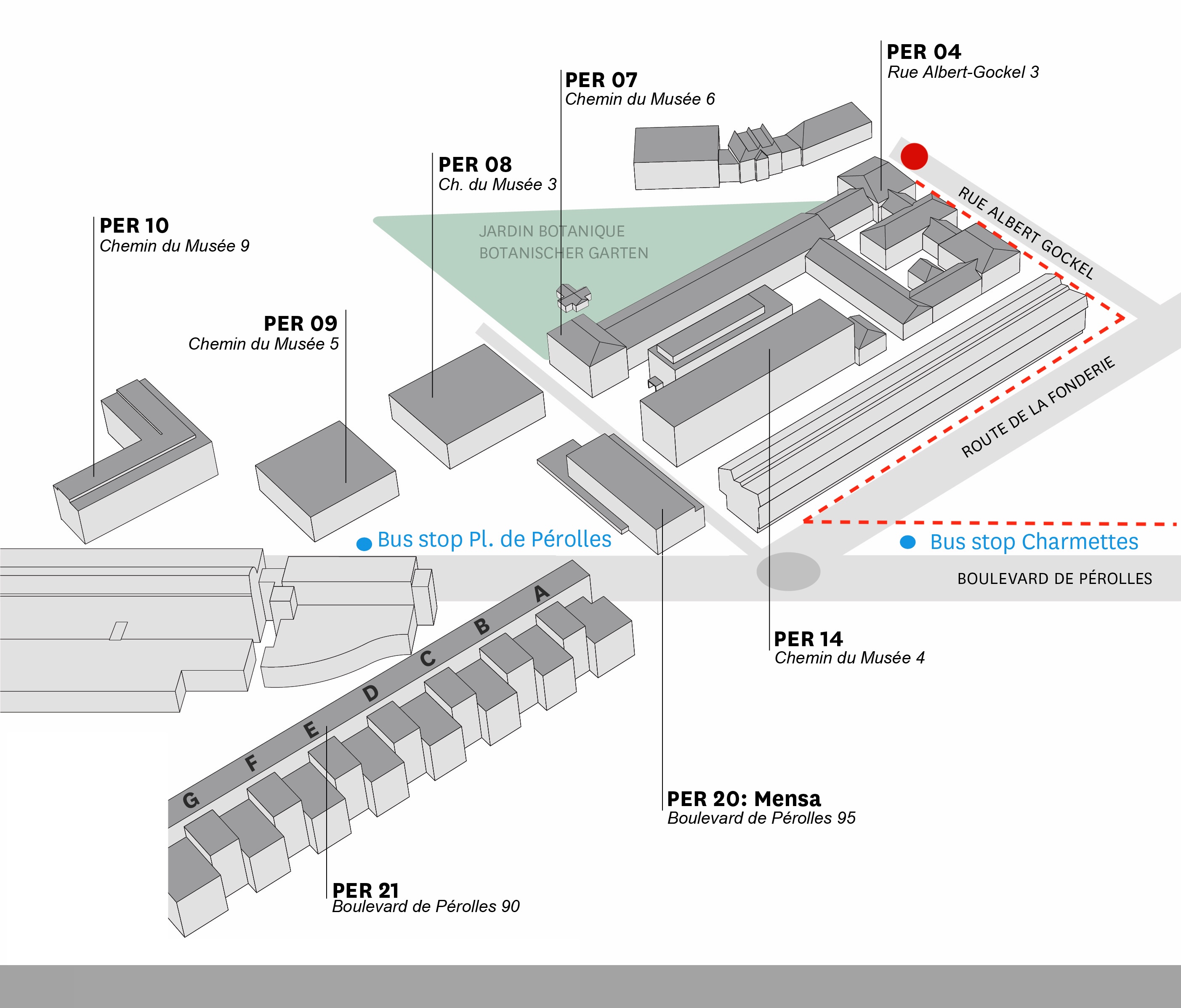
Logistical Questions
About the Workshop Series
Get in Touch
|
|
Keynote Speakers
Workshop Series Organizers
Website Terms of Use
Peer-review Management
|
| The Microsoft CMT service was used for managing the peer-reviewing process for this conference. This service was provided for free by Microsoft and they bore all expenses, including costs for Azure cloud services as well as for software development and support. |



California Institute of Technology (Caltech)
Pietro Perona is the Allen E. Puckett Professor of Electrical Engineering at
the California Institute of Technology, where he directs the Information Science and Technology
initiative. Professor Perona is a pioneer of computer vision, where his research helped to establish the
field of visual object categorisation. His Visipedia project gave rise to the iNaturalist and Merlin Bird
ID apps, and his group also develops vision systems for the automated analysis of animal behaviour. His
contributions have been recognised with the Koenderink Prize and the Longuet-Higgins Prize.
|
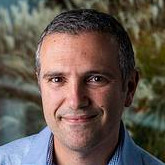
École Polytechnique Fédérale de Lausanne (EPFL)
Devis Tuia is Director of the Section of Environmental Science and
Engineering and Associate Professor at the Environmental Computational Science and Earth Observation
Laboratory. Professor Tuia is an expert in the use of remote sensing imagery and artificial intelligence
applied to Earth sciences. His work focuses particularly on Earth observation using various data sources,
and on developing computational methods to improve our understanding of environmental systems.
|
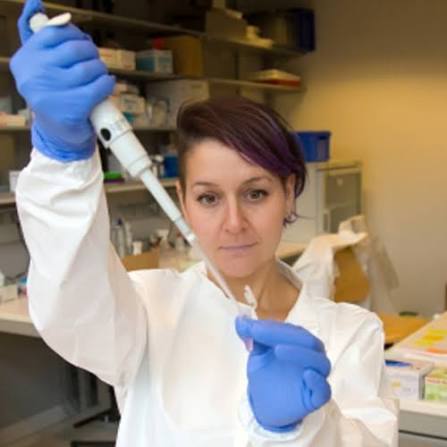
Max Planck Institute for Evolutionary Anthropology
Mimi Arandjelovic is a research scientist in the Department of Primate
Behavior
and Evolution at the Max Planck Institute for Evolutionary Anthropology, where she co-directs the Pan
African Programme: The Cultured Chimpanzee (PanAf). Her work spans primate genetics, molecular ecology and
conservation biology. She leads the Chimp&See citizen science project and the ZambaCloud AI platform
for automated species detection in camera trap videos.
|
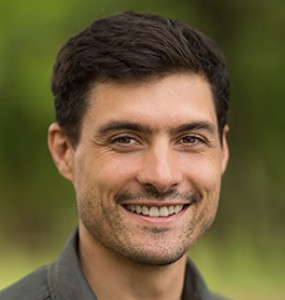
African Parks
Thierry Aebischer initially arrived in Chinko, Central African Republic in
2012 when he conducted research as a student on wildlife in the area. He was part of the team that first
founded the Chinko Project back in 2014 and has been with Chinko ever since. He is now Conservation
Manager.
|
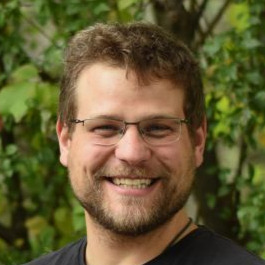
KORA
Since joining KORA in 2020, Luc Le Grand has participated in the monitoring
and research projects on lynx, wild cat and wolf populations in Switzerland. He works as wild life
biologist and data manager, and has developed a semi-automated workflow to process the large amount of
Camera Trap Data collected by KORA every year.
|
All times will be shown in Central European Time (CET = UTC+1)Keynote Presentations will be 30min. (+15min. Q&A), Paper Presentations are 15min. (+5min. Q&A)
| Day 1 - Thursday, January 21, 2027 | |
|---|---|
| TBA | Detailed programme to be announced |
| Day 2 - Friday, January 22, 2027 | |
|---|---|
| TBA | Detailed programme to be announced |
|
Tilo Burghardt Otto Brookes Majid Mirmehdi |
|
|
Paul Bodesheim Dimitri Korsch Joachim Denzler |


|
|
Daniel Wegmann Aimée Freiberg |
|
Daniel Wegmann (University of
Fribourg)
Christoph Praschl (Upper
Austrian University of Applied Sciences, Campus Hagenberg)
David Schedl (Upper
Austrian University of Applied Sciences, Campus Hagenberg)
Hjalmar S Kuehl (Senckenberg and TU Dresden)
Alexander Mathis (EPFL, Mathis Group for Computational
Neuroscience and AI)
Aishwarya Venkataramanan
(Computer Vision Group, Friedrich Schiller University Jena)
Sven Sickert (Computer Vision
Group, Friedrich Schiller University Jena)
Maik Henrich
(Wildlife Ecology and Management, University of Freiburg)
Timm Haucke (MIT CSAIL, Beerylab)
Dan Morris (Google AI for
Nature)
 |
 |
 |
|||
|
 |
 |


